If you have ever tried to email your doctor a photo of a skin rash or ask a question about your medication, you might have received a cryptic auto-reply: "Please do not send clinical information to this email address." It is frustrating. In an era where we can bank, shop, and order dinner with how to use NHS patient portal a few taps on a screen, why does healthcare communication feel like it is stuck in the 1990s?
The answer isn't that doctors are being difficult. It is about the legal and safety requirements surrounding your data. As a health content editor who has spent nearly a decade watching clinics struggle to balance modern patient needs with rigid data security, I am here to explain why the industry has shifted away from email toward the secure portal.
The Privacy Problem with Traditional Email
Most of us treat email as a private space. In reality, sending a standard email is more like sending a postcard through the mail. Anyone handling the mail, or anyone who intercepts it, can theoretically read what is written on it.
When you communicate with a healthcare provider, you are sharing Protected Health Information (PHI). Under the Health Insurance Portability and Accountability Act (HIPAA), which is the federal law in the US that protects sensitive patient health information, providers are legally required to ensure that your health data remains confidential and unaltered during transit.
Standard email is not encrypted in a way that satisfies HIPAA regulations. If a hacker intercepts an email containing your diagnosis or your birth date, the clinic could be facing massive fines, and more importantly, your privacy is compromised. A secure portal, by contrast, uses end-to-end encryption. This means the data is scrambled into a code that can only be unlocked by the sender and the intended recipient, https://highstylife.com/how-digital-prescriptions-and-portals-transform-long-term-healthcare-support/ keeping your information safe.
What Patients Actually Want: Speed and Flexibility
I have sat in on countless demos for patient-facing software. Every time, the clinical teams ask the same question: "Will this make it easier for the patient, or will it just add another password for them to remember?"
Patients today expect the "Amazon experience" from their healthcare. They want to book an appointment at 11:00 PM on a Tuesday, check their lab results without calling a receptionist, and message their doctor without playing phone tag.
Email fails here because it lacks structure. If you email a clinic, your message sits in a crowded inbox alongside marketing spam, vendor invoices, and internal newsletters. It is easy for a clinical query to get buried. A secure portal is designed specifically for healthcare workflows, ensuring your message is routed directly to the right department the moment you hit "send."
The Death of the Telephone Queue
For years, the "phone-based admin" model was the standard. You called the office at 9:00 AM, sat on hold for fifteen minutes, and spoke to a human to find an open slot. If that slot didn't work, you went back to the start of the process.
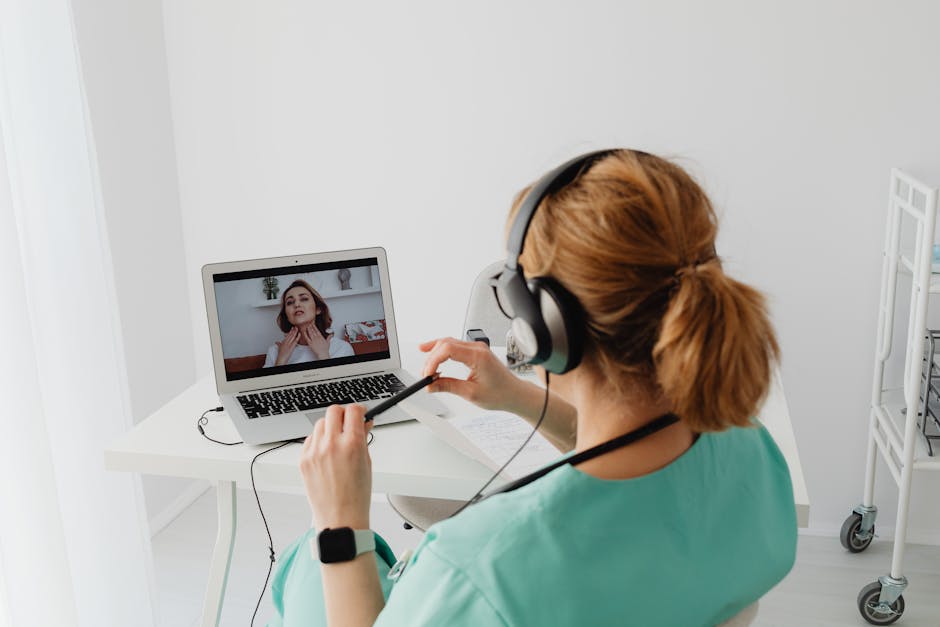
Online booking, integrated into secure portals, has changed this for the better. When you book via a portal, you are looking at a live view of the clinic's Electronic Medical Record (EMR) system. An EMR is a digital version of your paper chart. Because the portal is linked to this system, the availability you see is real-time. There is no double-booking, and there is no need to wait for a receptionist to check a paper ledger.
This is a major improvement for the patient experience. You can see all available slots, pick the one that fits your schedule, and receive an automated confirmation instantly. It replaces human-to-human admin time with a self-service tool that actually works.
How Secure Portals Simplify Your Life
Feature Old Way (Email/Phone) New Way (Secure Portal) Communication Unsecured, easy to lose. Encrypted messaging, tracked and verified. Booking Phone calls, long wait times. Self-service booking, 24/7 access. Results Waiting for a letter or call. Instant dashboard updates. Documents Paper copies or risky email attachments. Direct download from your dashboard.Virtual Consultations: A Normal Option
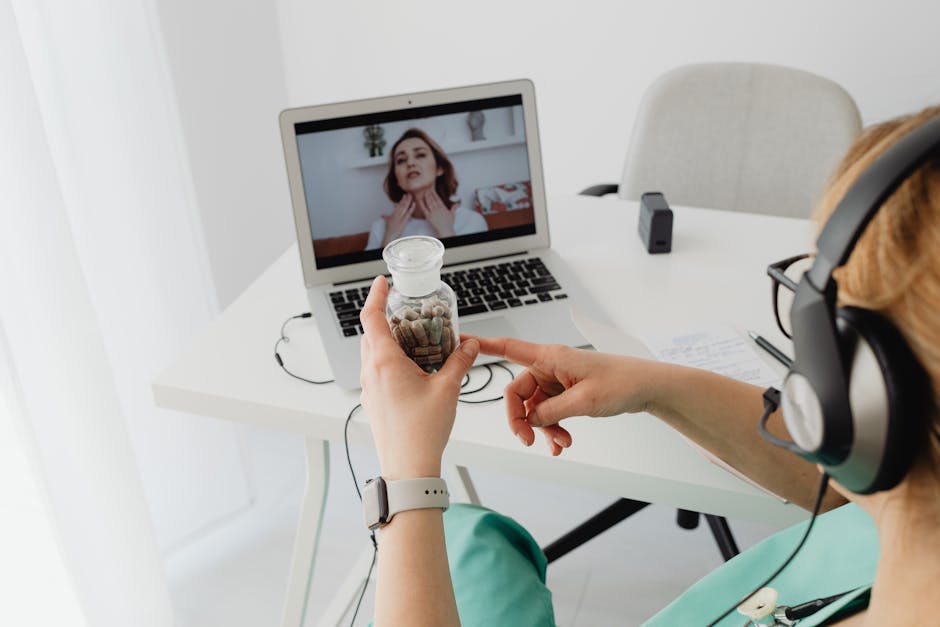
Virtual consultations, or telehealth, used to be considered a "niche" service. Now, it is a standard part of primary and specialty care. When you use a secure portal, the video link is often built directly into the platform.
This is crucial for two reasons:
Security: Using a bespoke video tool within a secure portal is much safer than using a generic video chat app. Context: Because the video tool is inside your portal, your doctor can pull up your chart, view your latest lab results, and check your history while you are on the screen. They aren't switching between four different programs to find your files; everything is in one place.This means your consult is more efficient. The doctor spends less time searching for your information and more time actually talking to you.
Centralized Platforms: The "Digital Front Door"
The term "Digital Front Door" is often thrown around by tech companies, but for a patient, it simply means having one place to go for all your health needs. A centralized platform acts as your personal health dashboard.
Instead of having to remember whether you emailed the clinic's generic address or the doctor's direct assistant, you log into your portal. Your dashboard shows you:
- Your upcoming appointments. Secure messages sent between you and your care team. Your medication list and refill buttons. Recent clinical notes or lab results.
This centralization is the biggest advantage over email. In an email chain, you lose the "thread" of your care. In a portal, your communication history is attached to your clinical profile. If you have a question about a medication you discussed six months ago, the record of that conversation is right there in your message history.
What Changes for You Next Week?
If you are frustrated by a clinic that still relies on phone calls and email, I understand. But the transition to secure portals is happening for a reason. These systems are designed to put you in the driver’s seat of your own care.
Next week, if your clinic asks you to sign up for their portal, don't just see it as "another login." See it as a tool that will:
- Eliminate the need for phone tag. Provide a safer, more private space to discuss your symptoms. Give you 24/7 access to your own health records. Ensure that your messages reach your provider without getting lost in an inbox.
Is it perfect? No. Technology in healthcare is still catching up to the modern world. But for the sake of your privacy and the accuracy of your clinical record, moving away from email is a necessary step that benefits everyone involved.
When you have a question, use the portal. When you need to book, use the app. When you see your doctor online, use the secure link. Your health data is too sensitive to trust to the open internet, and your time is too valuable to spend on hold.